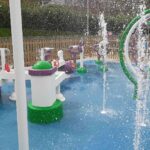
Splash parks or splash pads are popular attractions for families looking for an alternative to swimming pools. They provide an inclusive, fun, safe and stimulating environment, with water features and effects encouraging social and interactive play. And there is a rising demand for these splash park wet-play facilities, not only in parks and public spaces, but within leisure and aquatic centres as operators look to leverage water play to help attract and retain family demographics, boosting revenue on and off-season.
For the operator, they present a more cost-effective, lower environmental impact alternative to larger aquatic infrastructures such as a swimming pool or a dedicated children’s pool. Automation allows the system to run on predetermined operational hours and sequencing. This reduces water consumption and lowers operational costs. And with little or no standing water, since it drains back into the system to be treated and recirculated, there is far less risk for drowning, negating the need for fencing, lifeguards or other staffing, and further reducing operational and maintenance requirements.
However, designing, building and installing a commercial splash park or splash pad that is safe, accessible, and enjoyable for everyone requires careful comprehensive planning and consideration of several factors. In this article, we explore how to build splash parks and splash pads focusing on three key areas: safety, accessibility and design.
Safety
Safety is paramount in the construction of a splash park or splash pad, and we’ve highlighted some of the crucial elements to consider.
Non-Slip Surfacing: slip-resistant, cushioned surfaces such as rubber surfacing provide excellent traction, prevent slips and falls, eliminate sharp edges or corners and reduce the risk of accidents and injuries. As well as providing protection it allows for customised designs and themes through a variety of colours. Water-permeable surfacing also prevents puddling, swiftly draining water and enabling the area to dry quickly.
Water Circulation and Drainage Systems: To ensure a splash park or splash pad is a safe and healthy place to play, both an efficient water circulation system and a good drainage system need to be installed. An automated water circulation system is essential for getting water to the equipment and sustaining the splash park or splash pad’s needs. It also helps reduce the environmental footprint using less water than a traditional flow-through system. But, just as important is the need to drain the water away safely so that it can be filtered, disinfected and recirculated. All surfaces where water falls from the play equipment should be designed to efficiently drain the water. This prevents water accumulation and slipping hazards as well as the growth of harmful bacteria or other microorganisms. Regular water testing and monitoring is also essential to maintain the safety of users and ensure that the water remains healthy.
Secure Equipment: Ensuring that splash park or splash pad structures are securely installed, fastened and well-maintained is vital. Equipment needs to be able to withstand high traffic. Anchoring systems, the most secure method of installation, can be used to create a sturdy, immovable and secure fixture, but also allow features to be easily removed, changed or added to over time. Strong and durable equipment also means fewer repairs and replacements.
Signage: Including suitable safety signage and information indicating any rules or regulations that need to be followed, or any potential risks associated with the splash park or splash pad can help prevent accidents, promote responsible water play and help set expectations for users and parents/guardians.
Accessibility
A splash park or splash pad designed with accessibility and inclusivity in mind ensures that everyone can join in the fun. This means ensuring that the facility is easily accessible for everyone, regardless of their physical abilities or disabilities.
Flat surfaces, ramps, pathways, water features that are easily navigable for children using wheelchairs or any mobility aids and clearance for manoeuvrability around each play feature will help eliminate any barriers to entry, so children with physical disabilities can engage in water play alongside their peers without any issues.


Design
The design of a splash park or splash pad is crucial in creating a fun, safe and stimulating experience that caters to all ages and abilities and that users will enjoy and want to return to. It’s a complex process, not least because of the number of working parts and sophisticated system of underground drains, pipes, water supply lines, pumps, filters and computerised control systems. It’s important to consider everything from the number of visitors, who will use it and how, the size and shape, features and equipment and their ‘play value’, and the variety and types of experiences to be had to ensure every user can participate in a fun, exciting and safe way.
When we talk about inclusive design, this is an approach that considers the needs of different users, regardless of their age, abilities or capabilities. It focuses on creating environments that are welcoming, enjoyable and can be accessed and used by as many people as possible. Key aspects that contribute to a successful project include:
Zones: As well as flat surfaces, manoeuvrability and a variety of easy-to-use water play features, the flow and space can be designed and configured to make the splash park or splash pad even more accessible.
Incorporating different zones based on age and physical ability into the design of a splash park can offer younger children a safe separation from older children whose play levels and gross motor skill development may be quite different. However, locating these areas near to one another or overlapping zones provides a strong sense of inclusion and collaboration and gives everyone the opportunity to play together rather than just alongside each other.
Additionally, consider areas that, as you progress, increase in intensity comprising more powerful features such as sprays, jets, dumping buckets and waterfalls where users can be soaked or splashed. Moving from one zone to another, users can explore and choose how they want to engage with water at their own pace without the fear of being confronted with a lot of water all at once. This ensures that all users can participate and enjoy the splash park or splash pad safely and comfortably.
Themes: Adding a theme to your splash park or splash pad is a great way to add excitement and fun, to guide users through different zones and elements and enhance the overall experience. Having a theme can also help shape its design, colour scheme and features.
Water Play Features: There’s a wide choice of water play features and equipment available for outdoor and indoor splash pads and splash parks, each with characteristics and qualities that make them suitable for certain ages, activities and play intensities. Equipment that’s lower to the ground with a gentler flow such as ground jets that spray water upwards from the floor in various configurations is best suited to younger children and those who experience sensory issues. While for older children, above-ground features such as spray jets and water cannons with movable nozzles and getting drenched under fountains or tipping buckets is more appealing.
Whether you’re choosing features for a certain target demographic or creating zones aimed at different age groups and abilities, consider a universal design made up of easy-to-use features such as easy push-button controls or large levers that can be operable by people with limited dexterity. Features foster inclusivity when they are intuitive to operate. And wheelchair height accessible features (and adequate turn-around space) will help make the splash pad or splash park accessible to as many users as possible.
Sight lines: A splash park or splash pad should be carefully designed to ensure unobstructed sight lines across all areas so parents and guardians can easily keep children, especially those experiencing physical, developmental or cognitive limitations in view.
Amenities: Another consideration in the design and build of a splash park is the provision of amenities such as seating areas, shade structures, toilets and changing facilities, ensuring a comfortable and convenient experience for visitors.
Wrapping Up
Splash parks or splash pads offer an attractive value for money alternative to a swimming pool or a dedicated children’s pool but creating a successful splash park or splash pad demands an investment of time, resources, and vision to meet user and operator needs. Beyond the primary water play features, the park requires robust water circulation, filtration, and treatment systems to ensure safe and efficient operation. By prioritising safety and accessibility, splash parks or splash pads can be easily designed to be inclusive of all-ages and all-abilities, ensuring an engaging and enjoyable experience for everyone and providing an opportunity for everyone to have more fun, together.
Splash Park Solutions
Topline Pools and Wellness are experts in water play. From initial consultation, design and planning, to manufacture and installation, our team can help guide you through the process to create a safe, accessible, fun and immersive experience for everyone.
Our designs can transform any setting into a water playground space ideal for creative play. We work with local councils and authorities, holiday parks, hotels, leisure centres, architects, and landscape designers to create durable, safe, accessible, fun and immersive water play installations and experiences for everyone.