
Saunas have been a popular way to unwind and relax for centuries. They are now an integral part of the wellness journey for spa goers with sauna bathing linked to a range of health benefits from reducing stress, easing pain, and improving cardiovascular health. Over time, saunas have evolved with advancements in design and technology and different types of saunas have emerged each offering a unique experience tailored to specific needs and preferences. The key difference is in how they generate heat and the type of heat they produce. In this post, we explore these methods and the different types of sauna heaters available.
Types of Sauna Heaters
There are four types of sauna heaters: wood-burning, electric, gas, and infrared. However, the Finnish Sauna Society ‘hotly’ refute this considering infrared saunas to be a different type of heat therapy, distinct from the traditional Finnish sauna experience, and not a true sauna. But we’ll leave those ‘heated’ discussions to others!
Wood-burning
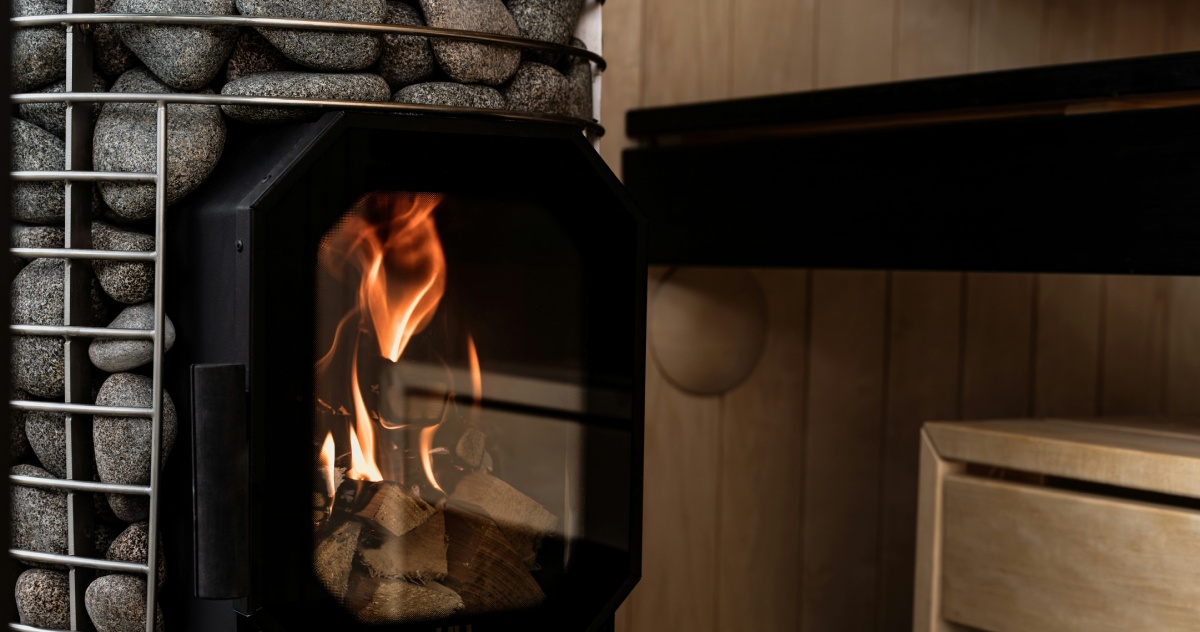
A wood-burning sauna heater uses a wood fire to generate heat. The fire heats sauna stones which then radiate heat, warming the air in the sauna room. Central to the traditional sauna experience is the application of water to control humidity levels, although this is typically kept to around 5% to 20% humidity with the temperature set around 70°C to 100ºC (158ºF – 212ºF). This lack of humidity is why they’re often referred to as a dry sauna. While you might hear the term “wet sauna”, this is usually used to describe a steam room, which uses a steam generator to heat the space, producing moist heat and a much higher level of humidity. Gently ladling water over the heated sauna stones creates the distinctive soft steam atmosphere or “löyly” as it’s known in Finnish tradition and that is characteristic of an authentic Finnish sauna. This burst of steam immediately increases humidity and intensifies the sensation of heat, creating a unique thermal environment that promotes sweating and relaxation.
Wood burning saunas offer a traditional, rustic and authentic experience, but they require effort to operate, a steady supply of wood for fuel, and the stove to be regularly cleaned to maintain proper functionality. This ongoing upkeep can be time-consuming and may deter those seeking a low-maintenance sauna option. They can also be complex to install and must comply with local building and fire safety regulations. And while wood is considered a renewable resource, its environmental and sustainability benefits are contingent upon responsible sourcing. Another drawback is the potential for smoke and air pollution. While a properly installed and well-maintained modern wood-burning sauna heater is designed for efficient combustion and minimising smoke output and emissions it can be a concern if you live in a smoke control area or if you have respiratory issues. Making sure these systems have proper ventilation is crucial.
Electric
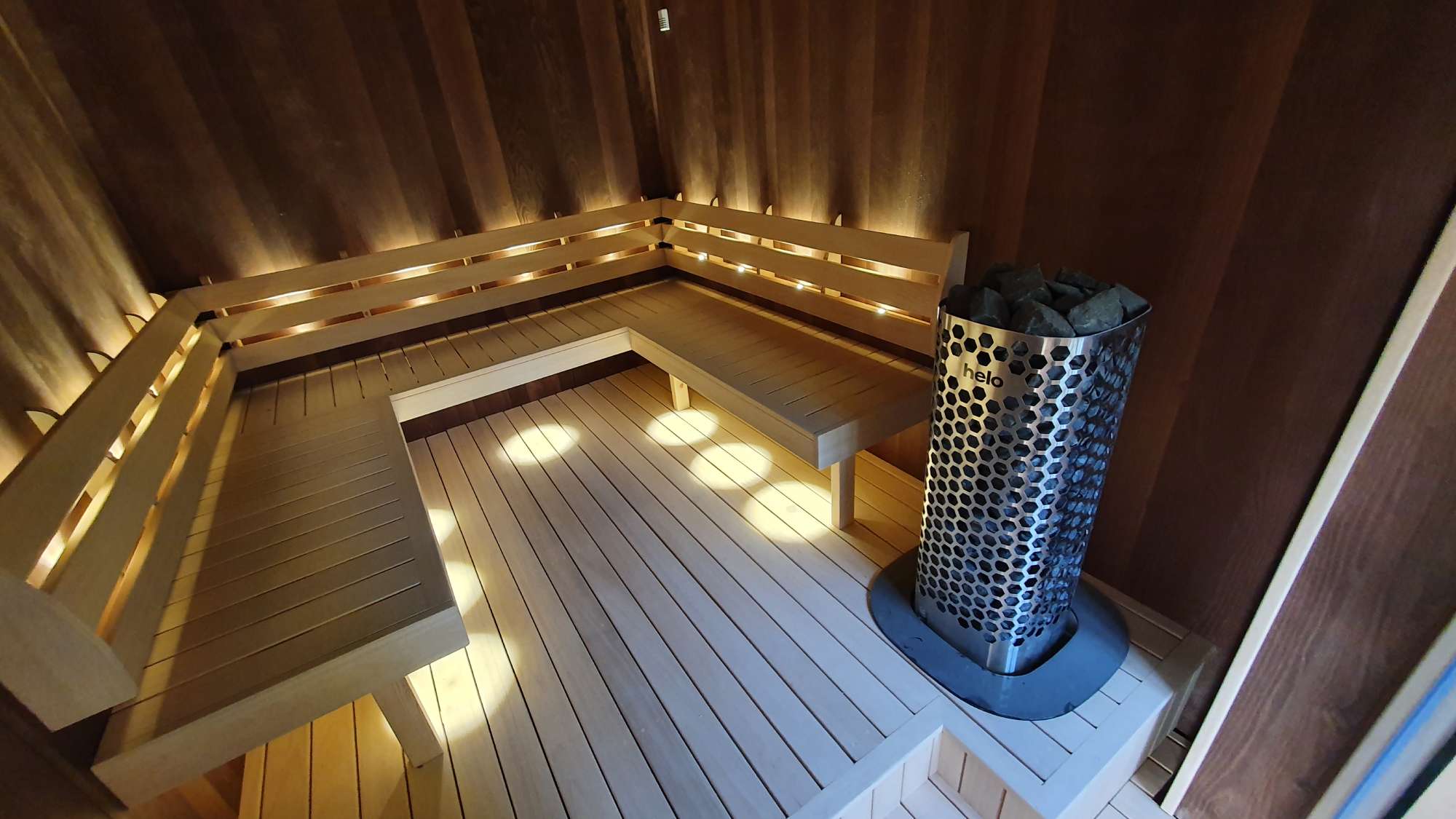
An electric sauna heater uses electricity to generate heat. As with wood-burning sauna heaters, electric sauna heaters heat a large volume of sauna stones which in turn heat the air and on to which water can be poured to produce the löyly steam, recreating the authentic sauna experience. These heaters come in various sizes and styles, including wall-mounted units, floor-standing models and built-in options, each offering unique features and benefits. Unlike traditional wood-burning saunas, electric sauna heaters provide faster heating times, precise temperature control and consistent heat, and can be equipped with remote controls and programmable timers – a comfortable temperature range is between 70°C and 90ºC [158ºF – 194ºF] as with conventional saunas heated by wood or gas (see below). They are also generally easier to install, offer a more convenient and user-friendly experience and require minimal maintenance, making them a popular choice for both home use and commercial settings. And in many sauna installations, they are the only feasible option.
Additionally, electric sauna heaters are a cleaner option as they produce no emissions and are not reliant on wood burning. While they are generally more expensive upfront compared to wood-burning heaters they can be more cost-effective in the long run due to their energy efficiency. They can also be paired with renewable energy sources, while innovative solutions are now emerging to recycle the heat generated by the sauna. While some may miss the authenticity, ambiance and radiant heat of a wood-fired sauna, through thoughtful design and material choices an electric-heated sauna can still achieve that rustic feel and a warm and inviting atmosphere.

Gas
A gas sauna heater is an alternative to electric and wood-burning heaters, using natural gas or propane as its fuel source. As with wood burning and electric sauna heaters, gas sauna heaters heat up the sauna stones and provide comparable heat output and a consistent and therapeutic dry heat. Gas sauna heaters are designed to draw cool air in through the body of the heater, which is then heated before being released into the sauna. Like electric sauna heaters, gas sauna heaters also come in various sizes and styles.
While they can be slower to heat up than an electric sauna heater, they can reach higher temperatures, and as with an electric sauna heater, they generally offer a convenient and user-friendly experience. Their efficiency and their use of natural gas or propane for heat can make them a good choice for large or commercial saunas where high heat and prolonged use is expected but they are less common than electric sauna heaters mainly due to access to the natural gas or propane, higher upfront costs, safety concerns and being the least environmentally friendly option. They also require a gas line installation and proper ventilation to manage airflow, ensure efficient heating, prevent overheating and safely expel exhaust gases, and this can be complex process that requires technical expertise and specialised knowledge. Additionally, they need regular maintenance to ensure that the gas lines and ventilation systems are working properly.
Infrared
An infrared sauna heater uses infrared light and waves transmitted by ceramic or carbon panels to create heat. While it cannot be observed by the human eye, it can be experienced kinetically as heat. It is capable of heating objects without heating the air between them, which is the principle behind the infrared sauna’s operation. Rather than heat the air, the infrared waves penetrate the skin and heat the body directly, raising core body temperature and inducing a gentle, soothing sweat.
An infrared sauna maintains a dry heat, operating at a lower temperature range usually between 50°C and 65°C (120°F -150°F) and this direct heating method and lower operating temperatures mean infrared saunas tend to be more energy-efficient than traditional saunas – find out more in our blog post – infrared saunas – everything you need to know. However, the lack of steam and surrounding heat, and the lack of higher temperatures so integral to the traditional sauna experience have the purists claiming that an infrared heater is not a true sauna heater.
Specialists in Bespoke Saunas
Topline Pools and Wellness design, build and install expertly crafted bespoke saunas of exceptional quality. Our saunas are found in hotels, spas, leisure centres, holiday parks and homes across the country. We have an expert understanding of sauna construction principles and best practices and can help you in your decision-making process with a range of electric heater and infrared heater options depending on your preferences. So, whether you have your heart set on a traditional Finnish sauna, a salt sauna or an infrared sauna, it will be crafted to our meticulously high standards, built to withstand demanding, heavy-duty use and provide exceptional durability, reliability and comfort. Get in touch today!




1 thought on “A Guide to Different Types of Sauna Heaters”
Comments are closed.